 Skip to content

Automation has become a key factor in the competitiveness of industrial companies. One of the critical points in any process is how to choose the best industrial palletizer for your production line.
Choosing the best industrial palletizer can make a difference. the difference between a smooth chain and one full of bottleneckserrors or occupational hazards.
But how do you know which palletizer is best suited to your needs? Below, we guide you through the most important aspects to consider.
Analyze your current production line
Before comparing options, it is essential to study your current workflow. Some key factors to consider are:
- Product type: weight, shape, fragility.
- Production volume: how many units per hour/day you need to palletize.
- Available space: both in height and usable area.
- Palletization format: whether you use Euro pallets, American pallets, or mixed formats.
Each line has particularities that determine the type of palletizing robot that can be successfully integrated.
Types of industrial palletizers
There are different types of palletizers on the market, each with specific advantages depending on the industrial environment:
- Cartesian palletizers: recommended for medium volume lines and heavy products. They are robust and precise.
- Anthropomorphic palletizers: ideal for high speed lines or when great flexibility in the placement of boxes or bags is required.
- Collaborative palletizers (cobots): designed for small spaces or for processes where humans and machines share the workspace.
A good comparison of palletizing robots should take into account not only the speed or price, but also the adaptability, ease of maintenance and scalability of the system.
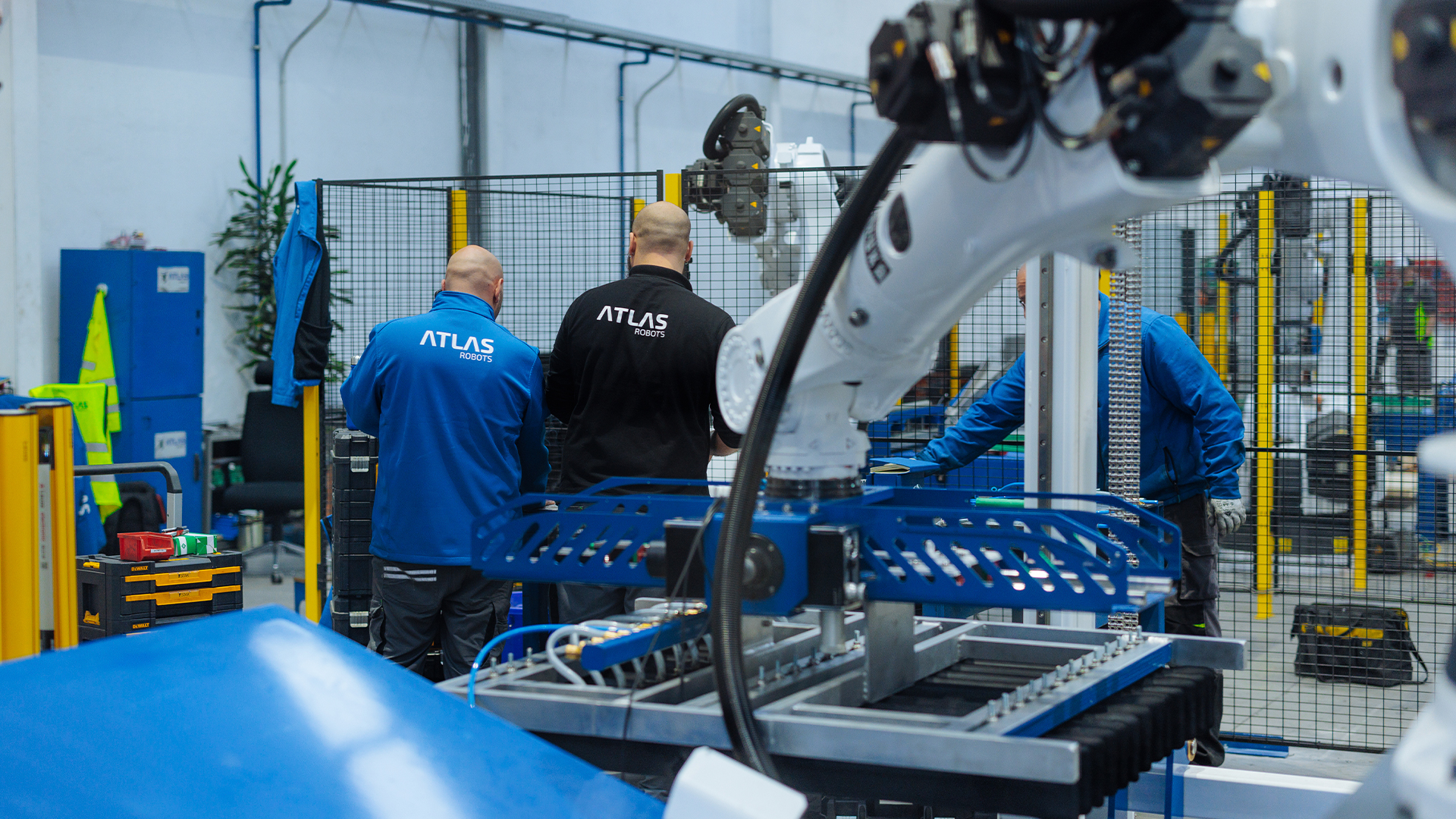
Here you can see an example of how a industrial palletizer.
Key criteria for choosing the best palletizer
Choose the best palletizer does not depend solely on the available budget. Here are the essential criteria to make an intelligent decision:
Load capacity and speed
Evaluate how many kilograms per cycle it can move and how many cycles per minute it performs. This should align with your current production rate and growth expectations.
Ease of integration
A robot that integrates easily with your management system or ERP, sensors and conveyor belts will save you time and costs in implementation.
3. Configuration and versatility
The ability to create different palletizing patterns, or easily switch between formats, is an added value that will give you flexibility for future needs.
4. Technical service and after-sales support
Choose a supplier that offers close technical support, fast spare parts and scheduled maintenanceto avoid costly downtime.
Advantages of automating with a robot palletizer
Integrating a palletizing robot into your line brings immediate benefits:
- Reduction of operator overexertion injuries.
- Greater consistency and precision in palletizing.
- Optimization of logistic space thanks to more compact patterns.
- Increased productivity and reduction of human errors.
Moreover, in many cases, the return on investment is achieved in less than 18 months.
Automation is looking to the future
Investing in automation is not just an operational improvement; it is a strategic decision. Choosing the best palletizer should be based on an honest assessment of your current needs and a realistic projection of your future growth. If you are considering taking the plunge, we encourage you to apply for a proposal of palletizing robots adapted to your needsThe most important thing to consider is not only the type of robot, but also the most suitable configuration for your line.
At Atlas Robots , we help you find the best solution for your industry, with personalized advice and 100% domestically developed technology tailored to a wide range of sectors.
You can consult information and request a quotation for any type of industrial palletizer from here.