 Skip to content

At Atlas Robots, we believe that automation and reducing the industrial footprint are not conflicting goals. Since 2015, we’ve been giving retired automotive robots a second life and putting them to work in small and medium-sized businesses that wouldn’t be able to automate with a new robot. Here, we explain how we do it, how much CO₂ we prevent, and what we’re committed to.
Finalists for the 2026 ESG Awards. This project, “A Second Life for Industrial Robots: Circular Automation Within Reach of SMEs,” was one of the three finalists in the second edition of the ESG Awards presented by Empack and Logistics & Automation Madrid (IFEMA, November 11 and 12, 2026), alongside Litotúria Packaging and Dibal, the winner of this edition.
Download the ESG 2026 Report (PDF)
Robots That Are Retired Before They're Worn Out
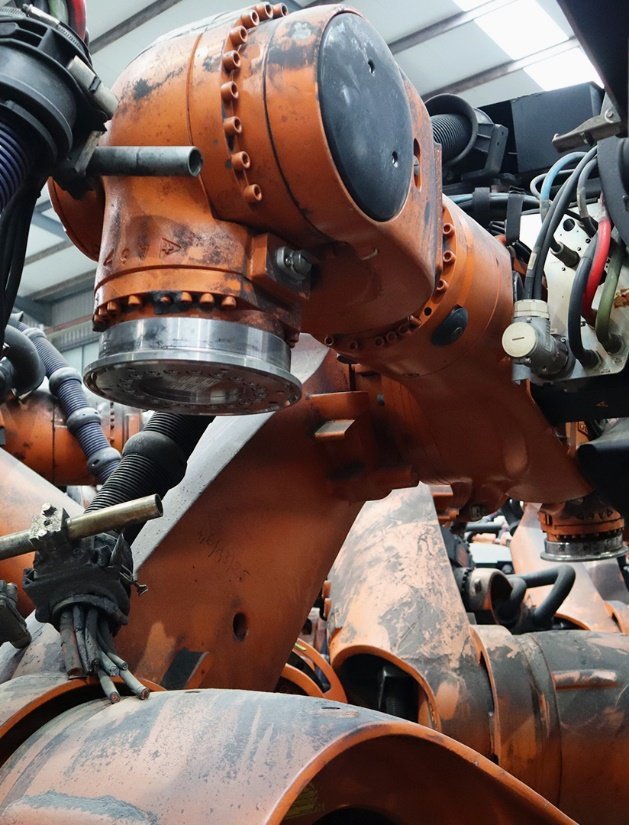
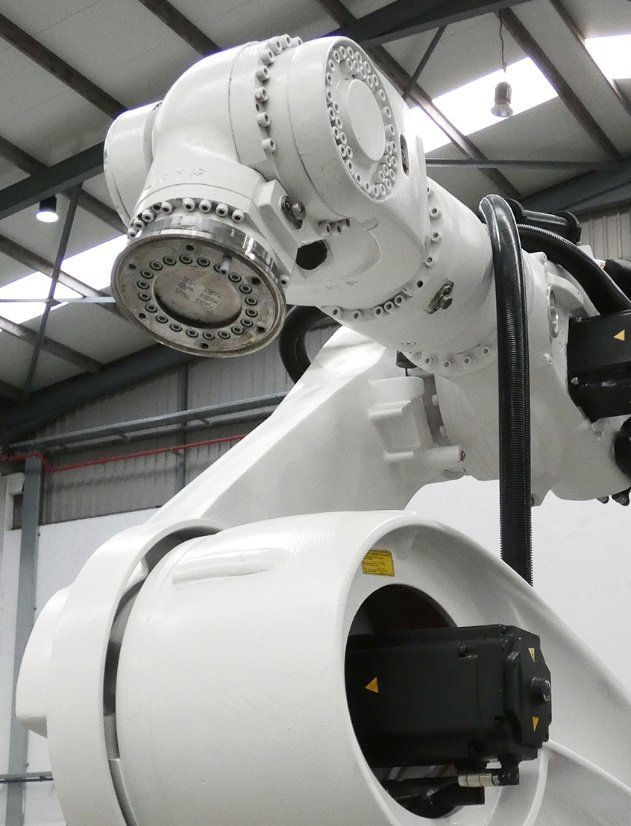
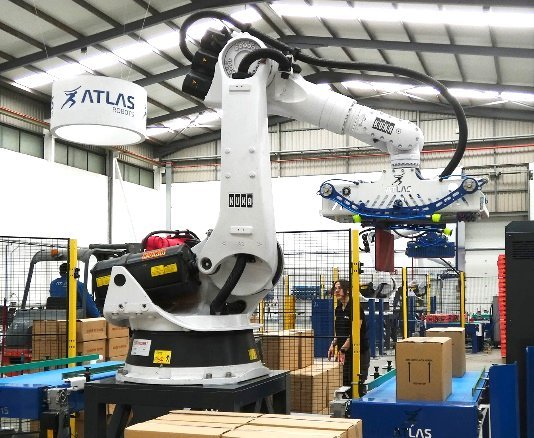
The automotive industry updates its production lines every few years and retires robots that are still mechanically sound. These robots are typically resold, sent to another plant, or scrapped. We recover these robotic arms from Renault, SEAT, Volkswagen, Audi, and BMW plants, recondition them at our workshop in Valdemoro (Madrid), and integrate them into palletizing cells for small and medium-sized businesses.
The proof that it works is time itself: the first robots we refurbished in 2015 are still in production today.
How We Refurbish a Robot
- Recovery. We buy batches of retired robots from automotive plants in Spain, France, and Germany.
- Comprehensive verification. We disassemble, clean, and inspect each component. We only change the oil, grease, and any parts that fail inspection, using replacement parts from our own inventory.
- Genuine software. We format the controller and reinstall the manufacturer's official software, with all its safety features.
- Integration and CE Marking. We deliver the complete cell and act as the manufacturer: risk assessment, technical dossier, and EC declaration.
95% of the robots that enter the workshop return to production. The remaining 5% are not discarded: they become a source of spare parts for the others.
How Much CO₂ Do We Avoid, and How Do We Calculate It?
To avoid inflating the figure, we always use the worst-case scenario: we only count the steel in the structure and subtract all emissions from our own process.
| Reference mass of an arm with a 210 kg payload | 1,100 kg |
| Metal fraction counted (80%) | 880 kg |
| CO₂ emissions from manufacturing that steel (1.92 kg CO₂/kg, worldsteel) | +1,690 kg |
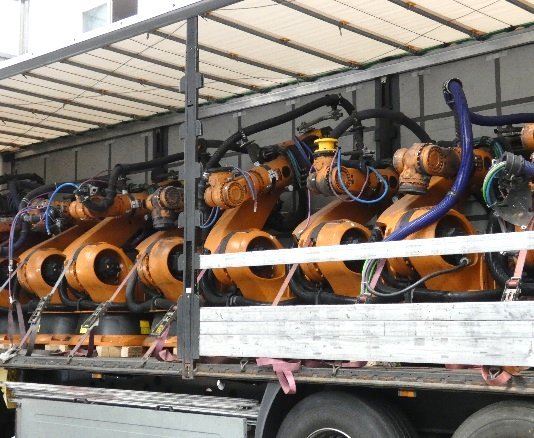
| Transportation, worst-case scenario: Germany, about 2,000 km, a trailer carrying 12 robots | −150 kg |
| Workshop: one man-week, about 200 kWh using the Spanish electricity mix | −40 kg |
| New oil and grease (with a margin) | −100 kg |
| Net CO₂e avoided per robot | ≈ 1,4 t |
| Total: more than 300 refurbished robots | > 400 t |
The actual figure is higher: we do not include the controller, the electronics, or the energy used in the manufacturing and assembly of the original robot, nor the transport a new robot would need from its factory.
Sources for the factors: worldsteel, Sustainability Indicators 2025 (1.92 metric tons of CO₂ per metric ton of steel, 2024 global average); DEFRA/BEIS, GHG Conversion Factors (articulated truck weighing more than 33 metric tons, approximately 0.92 kg CO₂e/km); MITECO, emission factor for the 2025 national electricity mix (0.19 kg CO₂e/kWh).
Automate Without Destroying Jobs
Our cells take over the toughest jobs—such as lifting 25-kg bags for eight hours—that fewer and fewer people are willing to take on. What we’re seeing with our clients is job reassignment, not layoffs.
"The introduction of the robot has not resulted in any new hires or layoffs. We have simply reassigned employees to tasks with higher added value."Alberto Bona, Supply Chain Director at Laboratorios Saphir (Atlas box palletizer)
And the price of a refurbished robot allows a family-owned small business to automate for the first time and become more competitive.
"Thanks to this, you can handle 10 or 15 pallets a day, whereas before it took two or three days. […] All of that is an added benefit that, once introduced to the market, has allowed me to double sales of this type of product."Clemente, manager of Pinturas Rodafuerte, La Roda (Albacete) (Atlas bag palletizer)
Guaranteed safety and open knowledge
"Refurbished" does not mean "second-hand." Each cell comes with the CE marking for the complete cell issued by Atlas Robots, and the robot operates using the manufacturer's official software with all safety features intact.
We also believe that technical knowledge should circulate just as freely as robots do. That’s why we’ve started publishing the code for our standard cells openly on GitHub: any customer or integrator can view, use, and adapt it without depending on us. It’s our way of combating planned obsolescence: repairing instead of replacing, maintaining a stock of spare parts, and not locking customers into proprietary software.
Our Commitments for 2027
- CO₂ Data Sheet and Traceability. Each cell will include its CO₂ avoidance record and the robot's traceability information.
- Open source. We will publish the program for the rest of our standard cells.
- Zero waste to landfills. Unsuitable parts will be sent to an authorized recycling facility.
- New European Machinery Regulation. We will adapt before the regulation becomes mandatory in January 2027.
Frequently Asked Questions
Is a refurbished robot reliable?
Yes. We inspect each component individually and reinstall the manufacturer's original software. The first units we refurbished, back in 2015, are still in production.
Do cells with refurbished robots have a CE mark?
Yes. Atlas Robots acts as the manufacturer of the complete cell and issues its risk assessment, technical dossier, and EC Declaration of Conformity.
How much CO₂ is avoided with a refurbished robot?
According to our conservative estimate, about 1.4 metric tons of net CO₂e per robot, just from the steel in the structure that doesn't need to be manufactured.